The platform that takes work off your hands, rather than adding to it.
You are the hub of the fleet. Klicq gives you more flexibility, a lower TCO, a happy group of lease drivers and better use of your pool cars, while booking, logging and settling run automatically.
-
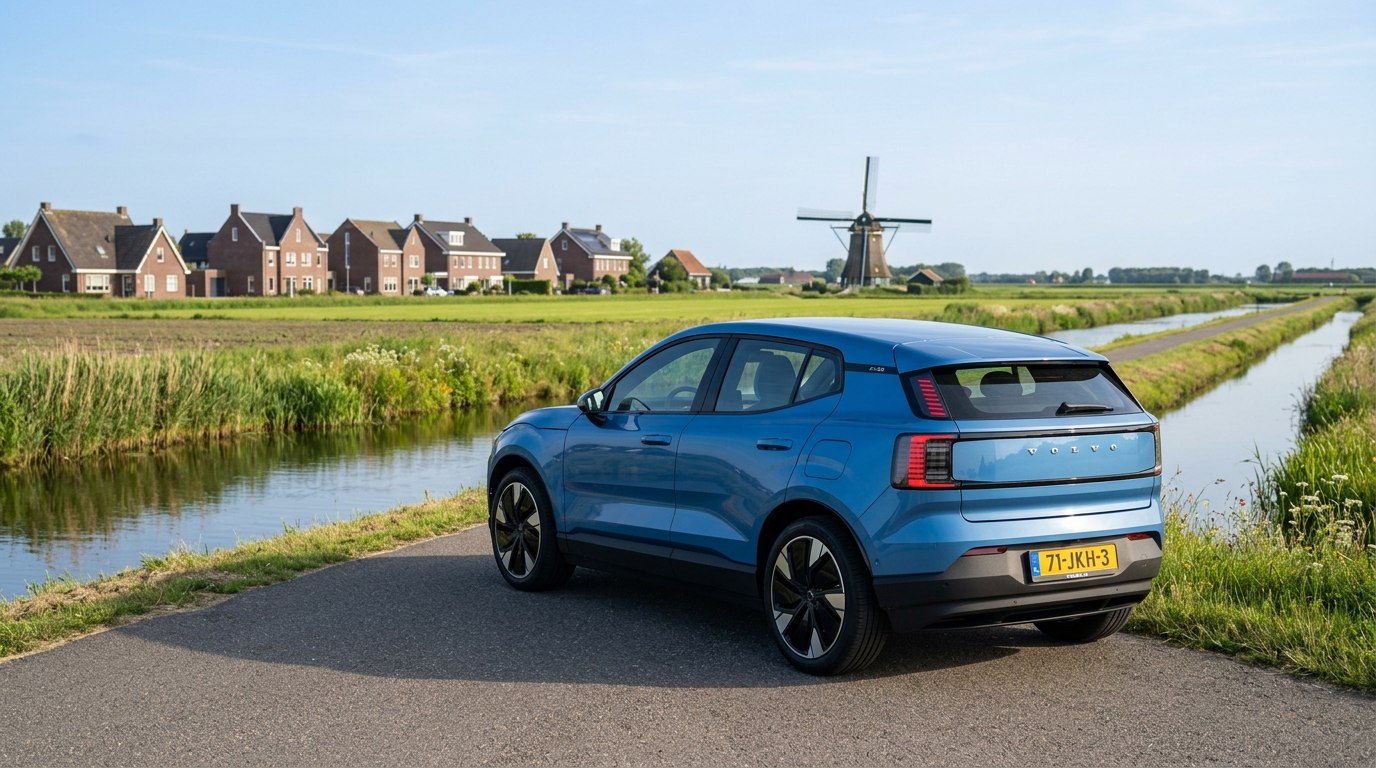
Volvo EX30
-

Polestar 2
-
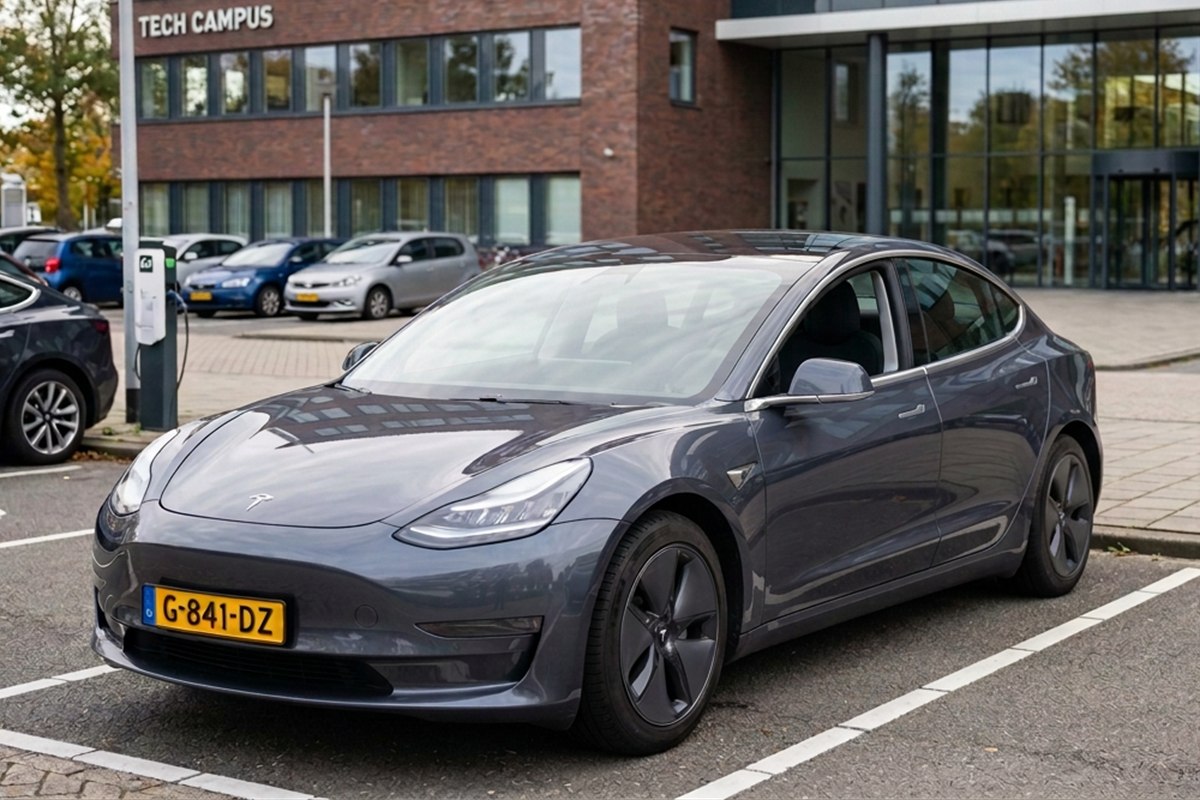
Tesla Model 3 · pool car
From fleet manager to director of mobility.
With Klicq you steer on data instead of gut feeling. The fleet becomes more flexible, cheaper and more transparent, and you set the rules.
-
Higher utilisation
Idle lease and pool cars become available to colleagues. The same fleet, more mobility.
-
Lower TCO
Fewer hire cars and mileage claims, optimal use and possibly a more compact fleet when contracts are renewed.
-
Happy lease drivers
Sharing is voluntary and gives the driver a direct advantage: a lower taxable benefit and any incentives.
-
Pool cars used to the full
Real-time availability, booking via the app and costs per trip on the right cost centre. For business trips only, and without Excel.
The pool car belongs to everyone. The records belong to no one.
It is precisely with the pool car that things quietly go wrong for tax. The Dutch Tax Administration does not assess intentions, only what can be proven.
In Klicq, the pool car is for business use only, and every use is recorded: who picked it up and returned it, the odometer readings, and for a business trip the destination.
Read what is at stake for tax-
Taken home
If the pool car is parked outside a colleague's home in the evening, they have it at their disposal outside working hours and can use it privately. Without records, nobody knows who had it, for how long, and for what.
-
“Just briefly” private, for a house move or a weekend
For one day of use, the private limit is 1.4 kilometres, and it is exceeded straight away. Without records, the 500-kilometre test cannot be applied.
-
A trip log that nobody owns
With a pool car, nobody feels responsible for the records. If the log is updated afterwards, it has no evidential value: the Tax Administration checks it against fuel receipts, MOT (APK) readings and traffic fines.
Keep the overview, step in only when needed.
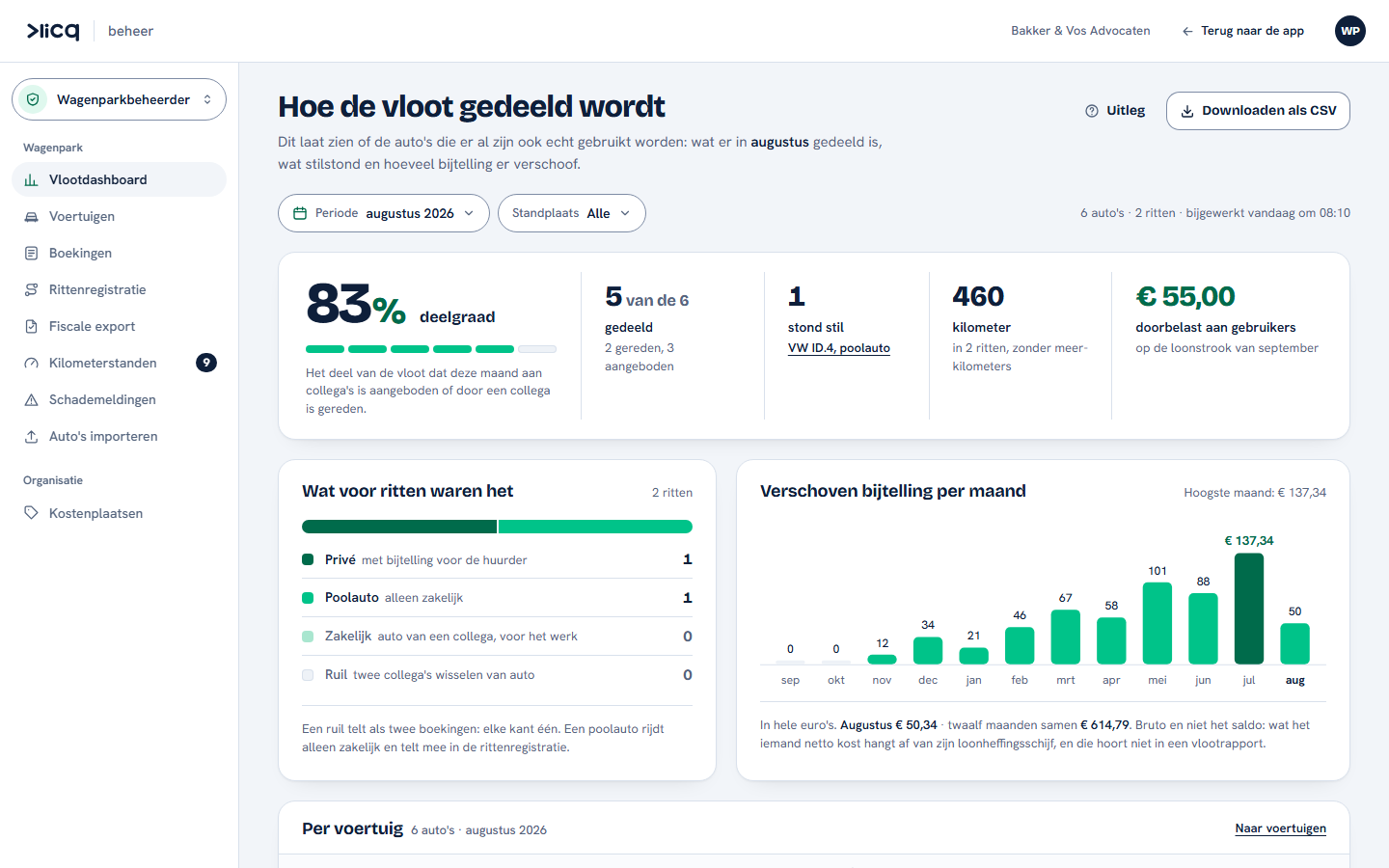
The fleet dashboard shows the sharing rate, the shifted taxable benefit and the breakdown of trips, per month and per location.
- Sharing rate, utilisation and savings per month and per location.
- Every shared trip is linked to a driver, so you spot excess mileage per car and per driver early and can allocate it fairly.
- Usable data for your WPM and CO₂ reporting, from the same records.
The questions you rightly ask.
Whoever manages the fleet wants to know what will land on their desk. The short answer: very little.
- Won't this give me too much work?
- No. Booking, logging and settling run automatically. You keep the overview through the dashboard and only step in when needed.
- And current contracts and excess mileage?
- Lease contracts stay unchanged. Every shared trip is recorded per car and per driver, so you spot excess mileage early and can allocate it fairly.
- And damage?
- It is always clear who drove when. The driver reports damage straight away in the app; handling follows your existing process.
What it asks of you.
You provide the vehicles and drivers, set the sharing policy and agree the key arrangements. You do most of this yourself, or you leave it to Klicq: your preference determines the approach. The technology is plug-and-play; success lies in the people, and you become the ambassador of a fleet that can do more.
-
Set-up: yourself or with us
Klicq prepares the basics; after that you set up most of the platform yourself: vehicles, employees, the sharing policy and the key arrangements. Rather hand it over? Then a Klicq team member does it with you.
-
The integrations
The integration with your HR or payroll package, or a validated export that your payroll team processes. And SSO if you want it: employees log in with your organisation's account.
-
Training, if you want it
Three learning tracks through the Klicq Academy: HR and payroll, Finance and accounting, and employees and administrators. Your teams do not become tax specialists; they know exactly what is already arranged automatically. You decide how much guidance you want.
-
Getting started
We start with the whole fleet and all employees, so all shared use is recorded from day one. For the roll-out we give you an outline communication pack: announcement, intranet and an introduction session.
A good first step: check with payroll where car sharing currently happens outside the records. Half an hour is usually enough to get a clear picture.
Two tips for the roll-out.
- Acknowledge the emotion
- A lease car is also status and security. The message is not “we are taking your car away”, but “your car helps the organisation move forward, and you get flexibility and benefits in return”.
- Set clear house rules
- Clear agreements on returning the car clean, charged and on time. Anyone who does not stick to them temporarily loses the right to book. Klicq supplies the house rules ready-made.
Take this to your management.
This is what Klicq delivers for management, HR and Finance, with the document to share.
- Management
- Lower fleet costs and more mobility from the fleet you already have. Our expectation is that Klicq always pays for itself.
- HR
- An attractive employment benefit without extra admin: the communication to employees is ready-made.
- Finance
- Tax certainty right through to payroll: Klicq supplies the changes, with an audit trail for the Tax Administration.
Tax risks of shared cars and pool cars
Want to see how the dashboard looks for your fleet?
We take your fleet as the starting point and show what sharing concretely delivers.